Welding Consumables Supplier in Dubai: Electrodes, Wires and Everything That Burns
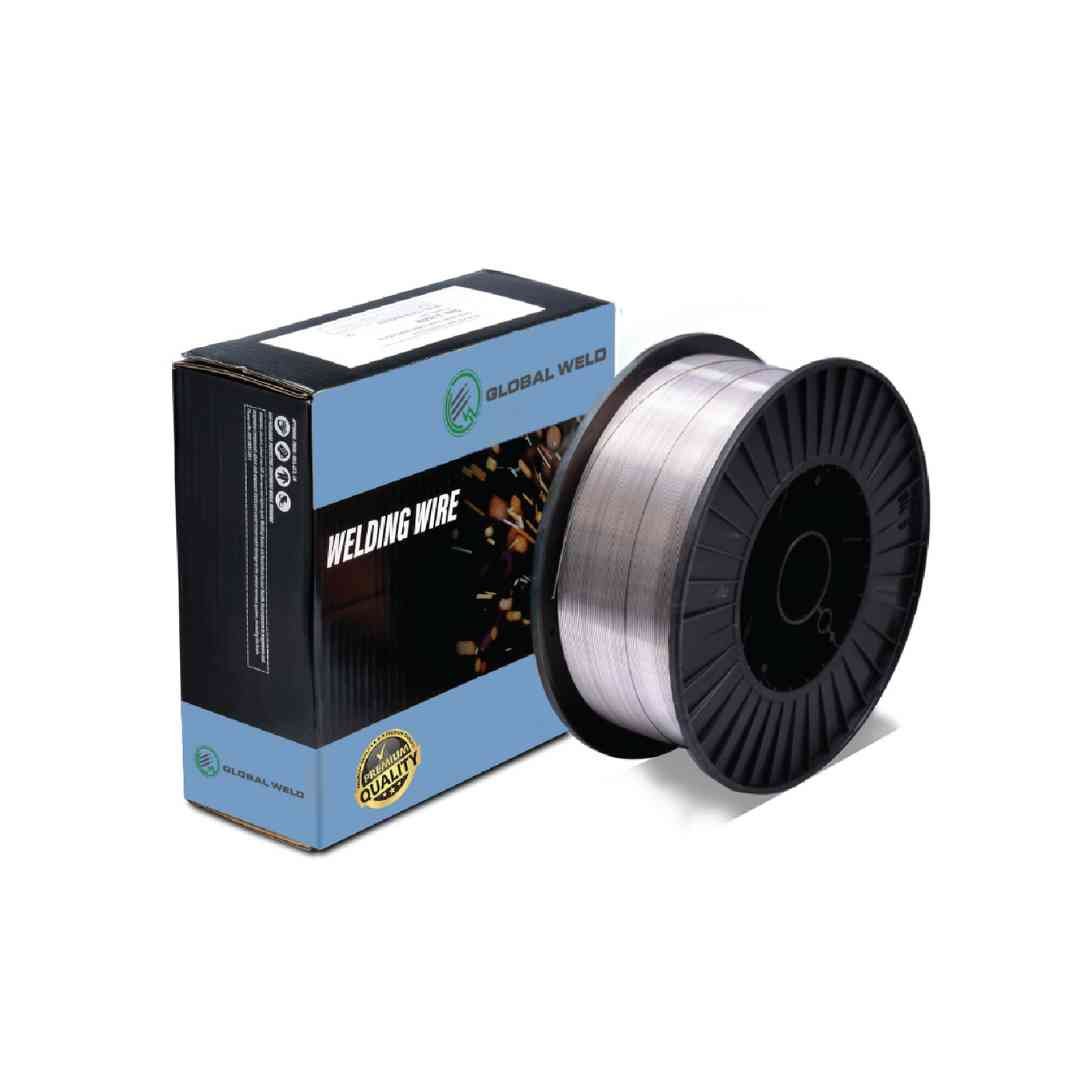
Consumables are the part of a welding budget nobody plans properly. A workshop will spend months choosing a welding machine and then buy electrodes from whoever answers the phone that morning. Then a weld fails inspection, or a stainless job comes back pitted, and the cost of getting it wrong turns out to be far more than the price difference between a good electrode and a cheap one.
This guide covers what is actually available in the UAE market, how to read the classification codes on the box, and which consumable suits which job. If you work in fabrication, oil and gas, marine, or building services anywhere between Deira and Jebel Ali, this is the practical version.
What counts as a welding consumable
A consumable is anything consumed by the arc or the process. That means:
- Stick electrodes for SMAW (manual arc welding)
- Solid MIG wire for GMAW
- Flux cored wire for FCAW
- TIG filler rods for GTAW
- Submerged arc wire and flux
- Brazing rods
- Contact tips, nozzles, ceramic cups, collets and liners
- Anti-spatter spray
The last two groups get forgotten in procurement and then stop a job at 2pm on a Thursday. Torch spares are consumables in every sense that matters.
Reading the AWS classification code
Almost every electrode sold in the UAE carries an AWS (American Welding Society) code. Contractors working to ADNOC, DEWA and Dubai Municipality specifications will be asked for it, so it is worth being able to read one.
Take E7018-1 H4R:
- E — electrode, SMAW process
- 70 — minimum tensile strength of the deposited weld metal, 70,000 psi (about 483 MPa)
- 1 — usable in all positions: flat, horizontal, vertical, overhead
- 8 — coating type and current: iron powder, low hydrogen, AC or DC
- -1 — optional suffix for improved low-temperature toughness
- H4R — diffusible hydrogen of 4 ml or less per 100 g of deposited metal, with a moisture-resistant coating
MIG and TIG wire uses a different pattern. ER70S-6 reads as electrode/rod, 70,000 psi tensile, solid wire, classification 6 — the number indicating higher levels of silicon and manganese deoxidisers, which is why it tolerates mill scale and light rust better than ER70S-3.
Stainless follows the alloy. E308L-16 deposits a 308L-type weld metal; the L is low carbon, the -16 describes coating and current characteristics.
Stick electrodes: the three that cover most work
E6013 — general fabrication
The most widely used electrode in the UAE, and the one most workshops keep in every diameter. Rutile coating, smooth arc, easy restrike, minimal spatter, and it will run on a basic AC transformer set. Good for sheet metal, light structural work, brackets, gates, general repair. Tensile around 60,000 psi.
Where it falls down is anything requiring toughness or crack resistance in thicker section. E6013 is not a low-hydrogen electrode and should not be substituted for one in structural or pressure work.
Common sizes: 2.0 mm, 2.5 mm, 3.2 mm, 4.0 mm.
E7018 — structural and pressure work
The low-hydrogen benchmark, and effectively mandatory across UAE oil and gas, pressure vessel and structural steel fabrication. The iron powder low-hydrogen coating deposits weld metal with very low diffusible hydrogen, which is what prevents hydrogen-induced cracking in higher-carbon and higher-restraint joints.
E7018 runs best on DC electrode positive, produces a heavier slag than E6013, and demands a slightly tighter arc length. Welders coming from E6013 usually need a short adjustment period.
Common sizes: 2.5 mm, 3.2 mm, 4.0 mm, 5.0 mm.
E7016 — where only AC is available
Similar mechanical properties to E7018 with a different coating system. Useful on sites running AC machines and on coated or galvanised steel.
The humidity problem nobody warns you about
This matters more in Dubai than in most places, and it is the single most common cause of avoidable weld defects in the region.
Low-hydrogen electrodes work because their coating is dry. Moisture in the coating breaks down in the arc and releases hydrogen into the weld pool, which is precisely what E7018 exists to prevent. Coastal UAE humidity sits between 60 and 90 percent for much of the year, and a box of E7018 left open on a bench overnight in Sharjah in August has absorbed enough moisture to stop being a low-hydrogen electrode.
Practical handling:
- Buy low-hydrogen electrodes in vacuum-sealed or hermetically sealed packs where the job specification allows
- Move them into a holding oven at 100–150°C immediately on opening
- Re-dry per the manufacturer’s data sheet if exposure limits have been exceeded — typically 300–350°C for one to two hours, though always check the specific product
- Never re-dry rutile electrodes like E6013 at low-hydrogen temperatures; the coating is not designed for it
- Track atmospheric exposure time if you are welding to AWS D1.1 or a client specification, because the inspector will ask
Buying premium electrodes and storing them badly wastes the money twice.
Stainless steel electrodes
Grade selection follows the base metal, and the common mistake is treating all stainless as one material.
| Electrode | Use |
|---|---|
| E308L-16 | Welding 304 and 304L stainless to itself. The default for food-grade, architectural and general stainless fabrication |
| E309L-16 | Dissimilar joints — stainless to carbon steel. Also used as a buffer layer before an overlay |
| E316L-16 | Welding 316 and 316L. Higher molybdenum for chloride resistance, which matters in marine and coastal installations |
For anything exposed to seawater or salt air — and in the UAE that is a long list — 316L is worth the premium over 304. The chloride load on a structure in Dubai Maritime City is a genuine engineering input, not a sales argument.
Keep stainless consumables physically separated from carbon steel ones. Cross-contamination from shared brushes, grinding discs or storage racks produces rust spotting on finished stainless that the client will notice and reject.
Cast iron electrodes
Cast iron repair is its own discipline. E NiFe-CI — a nickel-iron electrode to AWS A5.15 — is the standard choice for repairing machinery castings, engine blocks, pump housings and gearbox cases. The nickel-iron deposit is machinable and tolerates the thermal stresses of a cast iron joint better than a pure nickel electrode on heavier sections.
Cast iron work rewards low heat input, short stringer beads, and peening between passes. Rushing it cracks the casting adjacent to the weld, usually within a day of the repair.
MIG and flux cored wire
ER70S-6 solid wire
The standard solid MIG wire for carbon steel, copper coated, run under CO₂ or an argon/CO₂ mix. In the UAE most workshops run pure CO₂ for cost, accepting slightly more spatter in exchange. An 80/20 argon/CO₂ mix gives a cleaner bead and less spatter cleanup, which pays for itself on visible work.
Sizes: 0.8 mm, 0.9 mm, 1.0 mm, 1.2 mm. The 1.2 mm spool is the volume seller in structural fabrication.
Note that “CO₂ welding wire” and “ER70S-6” are the same product described two different ways. Site foremen ask for the first, engineers specify the second.
E71T-1 flux cored wire
Gas-shielded flux cored wire, all-position, with high deposition rates on thicker material. It is the natural choice for heavy structural fabrication, shipyard work and anything requiring volume of deposited metal per hour. The slag covering supports the weld pool in vertical-up, which is where flux cored genuinely outperforms solid wire.
Keep spools sealed. Flux cored wire is hygroscopic in the same way electrode coatings are, and a half-used spool left on the machine over a weekend will produce porosity on Monday.
TIG filler rods
TIG work in the UAE concentrates in stainless pipework, food and pharma installations, aluminium fabrication and thin-wall precision work. The rods mirror the electrode grades: ER308L, ER316L, ER309L for stainless, ER70S-6 for carbon steel, and the appropriate 4043 or 5356 grades for aluminium.
Common diameters: 1.6 mm, 2.0 mm, 2.4 mm, 3.2 mm.
TIG also consumes torch parts continuously — collets, collet bodies, ceramic cups, back caps and tungsten electrodes. Workshops that keep a full spares kit lose far less time than those that order a single ceramic cup after it cracks.
Submerged arc consumables
For heavy plate, tank fabrication, pressure vessel longitudinal seams and structural beam work, SAW gives the highest deposition rate of any common process. The consumable is a wire and flux combination, and the two are specified together because the flux contributes alloying elements to the deposit. Match the pair to the mechanical properties required, not just the wire.
What to look for in a supplier
Beyond price per kilo:
Batch certification. For any project work, you will need mill certificates or a manufacturer’s test certificate traceable to the batch. A supplier who cannot produce one is a problem the day the inspector arrives.
Stock depth across sizes. Holding 3.2 mm E7018 is easy. Holding 2.5 mm and 5.0 mm as well, in quantity, separates a distributor from a reseller.
Storage conditions. Ask how low-hydrogen electrodes are stored at the warehouse. If the answer is vague, assume the worst.
Delivery reach. A consumables shortage stops a crew, not just a job. Suppliers who deliver across Dubai, Sharjah, Abu Dhabi and the northern emirates keep you working.
Technical support. Someone who can answer whether 309L or 308L suits a particular dissimilar joint is worth more than a two percent discount.
Buying welding consumables from GescoStore
GescoStore supplies welding consumables across the UAE and GCC from Dubai, covering welding electrodes in mild steel, stainless and cast iron grades, welding wires including MIG/MAG, TIG and submerged arc, welding accessories and torch spares, and welding safety and PPE.
Stock includes E7018 low hydrogen electrodes, E309L-16 stainless electrodes, E NiFe-CI cast iron electrodes and E71T-1 flux cored wire.
Add items to a quote request for pricing, or call +971 4 236 5500 for bulk requirements and project supply. For larger or recurring orders, use the bulk enquiries form.
Frequently Asked Questions
Which welding electrode is most used in the UAE? E6013 for general fabrication and E7018 for structural and pressure work. E6013 wins on volume because it suits light work and runs on basic equipment; E7018 dominates on anything with an inspection requirement.
What is the difference between E6013 and E7018? E6013 is a rutile electrode with about 60,000 psi tensile strength, easy to run and suited to general fabrication. E7018 is a low-hydrogen iron powder electrode at 70,000 psi, used where hydrogen cracking is a risk — structural steel, pipelines and pressure vessels. They are not interchangeable on specified work.
Do low hydrogen electrodes need to be baked before use in Dubai? Usually yes, unless you are opening a sealed vacuum pack and using it immediately. UAE humidity causes coatings to absorb moisture quickly. Hold opened electrodes in an oven at 100–150°C and re-dry per the manufacturer’s instructions if exposure limits are exceeded.
Which stainless electrode do I need for welding stainless to mild steel? E309L-16. It is formulated for dissimilar metal joints and for buffer layers. Using 308L on a dissimilar joint risks a brittle, crack-prone weld.
Is ER70S-6 the same as CO2 welding wire? Effectively yes. ER70S-6 is the AWS classification for the copper-coated solid MIG wire most commonly run under CO₂ shielding gas. The two names describe the same product from different angles.
Can I get mill certificates with welding consumables in the UAE? Yes, and you should ask for them on any project or inspected work. Request batch-traceable certification at the time of ordering rather than after delivery.
Do you deliver welding consumables outside Dubai? GescoStore delivers across the UAE including Sharjah, Abu Dhabi, Ajman, Ras Al Khaimah, Fujairah and Umm Al Quwain, with export supply to GCC markets.