Butterfly Valve Supplier in UAE: 7 Checks Before You Order
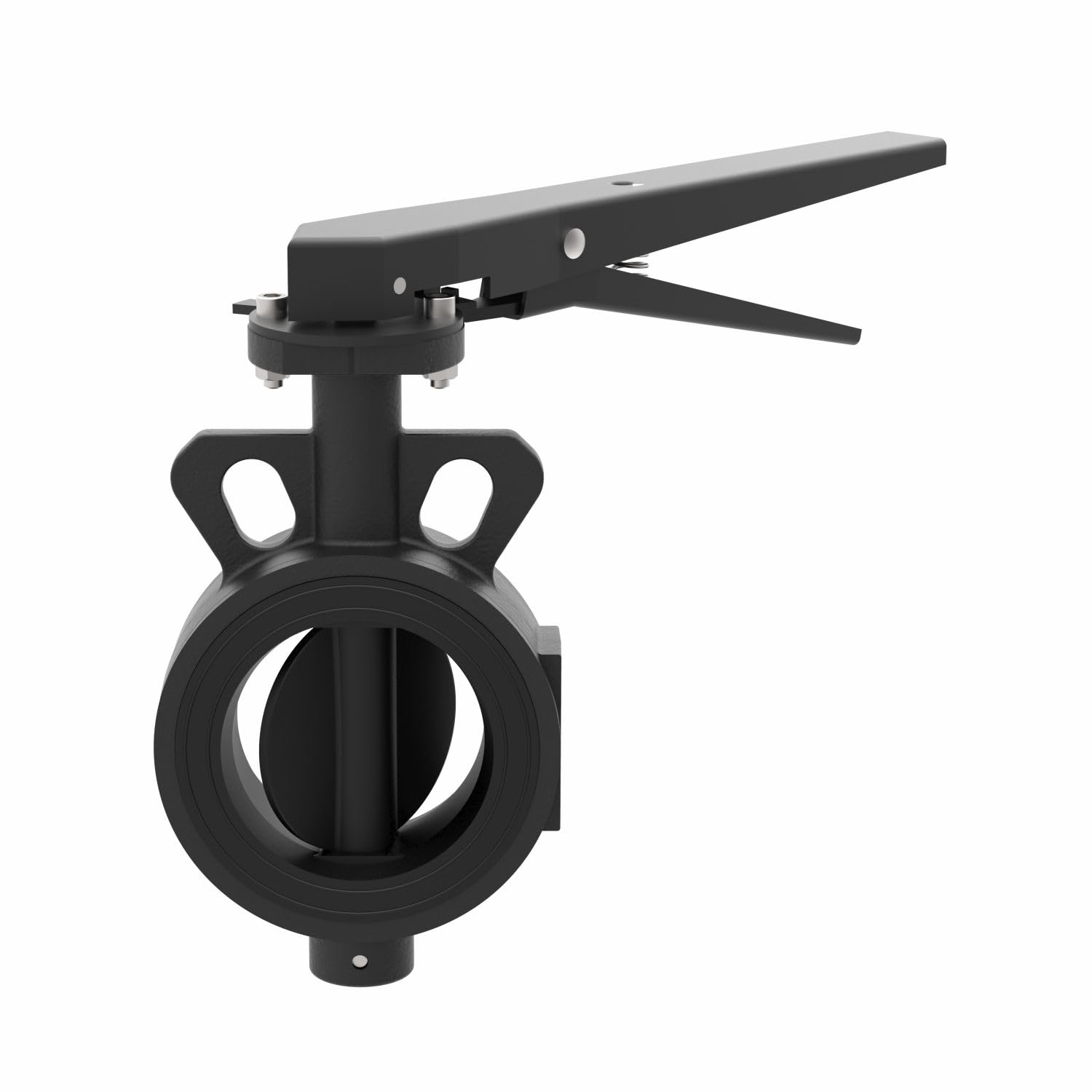
A butterfly valve is the cheapest way to shut off a large pipe, and that is exactly why so many get bought on price alone. Then the seat swells on a diesel line, or a big valve gets shut too fast and the pipework bangs, and the saving is gone.
If you are comparing quotes from a butterfly valve supplier in UAE, the seven checks below will tell you whether the valve on the quote actually suits your line. We stock cast iron butterfly valves from 2 to 10 inch in Dubai, but the checks apply whoever you buy from.
What a butterfly valve is good at
A butterfly valve has a disc in the middle of the bore that turns a quarter turn to open or shut. That makes it short, light and quick to operate. A 6 inch butterfly valve fits between two flanges in not much more space than a thick gasket, where a 6 inch flanged gate valve needs a long body and a lot more iron.
The trade-off is that the disc always sits in the flow, even fully open. You lose a little pressure across it, and you cannot pass a cleaning pig through. For chilled water, cooling water, irrigation and general water service, neither matters much. That is why butterfly valves are the default isolation valve in most HVAC plant rooms in the UAE.
7 checks before you order from a butterfly valve supplier in UAE
1. Wafer or lug body
A wafer valve sits between two flanges, held by long bolts that pass right through from one flange to the other. It is the cheaper body and works well in the middle of a pipe run. What it cannot do is hold the line on its own if you remove the pipe on one side, because the same bolts hold both flanges.
A lug valve has threaded lugs around the body, so each flange bolts to the valve separately. You can open one side while the other stays under pressure, and a lug valve rated for it can serve as the last valve on a line (a typical lugged PN16 specification lists end-of-line service at full pressure). Use lug bodies at pump outlets, in front of equipment you will service, and at the end of a run.
2. Seat material: EPDM or NBR
The rubber seat does the sealing, so it decides what the valve can carry. EPDM handles water, chilled water and most HVAC duties, with typical short-term ratings from about -10 to +120 °C. NBR is the choice for oils, fuels and compressed air, with a lower ceiling of around +80 °C.
Get this wrong and the valve fails slowly. EPDM swells in contact with diesel and hydraulic oil, the disc starts to bind, and within months it will not shut tight. If the line carries anything oily, say so when you ask for a price.
3. Disc material
Ductile iron discs, coated or nickel plated, suit clean water and closed chilled water loops. For treated sewage effluent used in landscape irrigation, brackish groundwater or anything mildly aggressive, a stainless steel disc lasts much longer. Seawater and Gulf cooling water call for aluminium bronze or a higher alloy.
In a rubber-lined valve the disc is the only metal the water touches. If the water is poor, that is where the extra money should go.
4. Pressure rating, and the derating nobody mentions
PN16 on the body means the flange drilling and shell suit a 16 bar system. It does not always mean the valve will hold 16 bar across a closed disc at every size. Some manufacturers rate their larger sizes lower: one common wafer valve datasheet allows 16 bar up to DN200 but only 12 bar at DN250 and DN300.
If your system runs close to its limit, read the pressure table on the datasheet, not just the casting on the body.
5. Lever or gear operator
A lever opens and shuts the valve in a single quarter turn. That is fine on small sizes, and lever operation is normal from about 40 to 150 mm (1½ to 6 inch). From 200 mm (8 inch) up, most specifications call for a gearbox.
The gear makes the valve easier to turn against the flow, but the bigger reason is speed. Shutting a large valve in one movement sends a pressure surge back up the line, which is the bang you hear as water hammer. A gearbox forces a slow close. For valves mounted high on a rack, ask for a chain wheel on the gearbox.
6. Flange drilling: PN16 or ANSI Class 150
Both are common in the UAE. Municipal water, HVAC and building services mostly use PN16 flanges to EN 1092-1. Oil and gas, process plants and anything designed to American codes tend to use ASME Class 150.
The bolt circles differ on most sizes, so a valve drilled for one will not bolt up cleanly to the other. On retrofit jobs, check the existing flanges on site before you order.
7. Approvals for fire and drinking water
Two applications need more than a good valve. Fire fighting systems normally require valves that are UL listed or FM approved and accepted by UAE Civil Defence, usually with a supervisory switch that shows the valve is open. Drinking water lines need seat and coating materials approved for potable contact, such as WRAS, or whatever the local water authority accepts.
A general-purpose valve, however well made, will not pass either inspection. Tell your supplier up front if the valve is going on one of these systems.
Butterfly valve sizes and the usual operator
| Size | DN | Usual operator |
|---|---|---|
| 2 inch | DN50 | Lever |
| 2½ inch | DN65 | Lever |
| 3 inch | DN80 | Lever |
| 4 inch | DN100 | Lever |
| 6 inch | DN150 | Lever |
| 8 inch | DN200 | Gear recommended |
| 10 inch | DN250 | Gear recommended |
These are the sizes GescoStore stocks in its cast iron butterfly valve range.
Fitting a butterfly valve without damaging it
Most butterfly valve damage happens on the day it goes in, not in service. A few habits prevent it:
- Install the valve with the disc slightly open, so the disc does not catch the flange and the liner is not squeezed out of shape as the bolts go tight.
- Centre the valve between the flanges, then open and shut it fully before final tightening to check the disc clears the pipe bore.
- Tighten the bolts evenly in a cross pattern. Pulling one side down first distorts the seat.
- Most rubber-lined valves seal on their own liner, so extra flange gaskets are usually not needed. Check the datasheet for the valve you have.
- Weld the flanges to the pipe before the valve goes in. Welding heat near a fitted valve cooks the seat.
Buying butterfly valves from GescoStore
GescoStore supplies the C.I Butterfly Valve with a cast iron body, ductile iron disc and lock-and-lever operation, in sizes from 2 to 10 inch. You can see it alongside the rest of the butterfly valve range and our gate, check and ball valves and Y strainers in the valves section.
To get an accurate quote quickly, send us:
- Size and quantity
- What the line carries, and its temperature
- System pressure
- Flange standard: PN16 or ANSI Class 150
- Wafer or lug body, and lever or gear
Add the valve to a quote request on the product page, use Bulk Enquiries for project quantities, or call +971 4 236 5500. We deliver across the UAE and the GCC.
Frequently asked questions
What is the difference between a wafer and a lug butterfly valve? A wafer valve is clamped between two flanges by through-bolts and suits mid-line isolation. A lug valve has threaded lugs, so each flange bolts on separately and one side can be removed while the other stays under pressure.
Which seat should I choose for chilled water? EPDM. It suits water and chilled water and handles typical HVAC temperatures. Choose NBR only if the line carries oil, fuel or compressed air.
Can a butterfly valve be used to control flow? Yes, it throttles better than a gate valve. Avoid running it nearly closed for long periods, though, because the high velocity past the disc wears the seat and makes noise.
Do butterfly valves need flange gaskets? Most rubber-lined butterfly valves seal on their own liner and do not need separate gaskets. Check the manufacturer’s datasheet for your valve.
What sizes can I get from a butterfly valve supplier in UAE like GescoStore? GescoStore stocks cast iron butterfly valves in 2, 2½, 3, 4, 6, 8 and 10 inch sizes, with delivery across the UAE and GCC.
Are butterfly valves suitable for steam? Not the rubber-seated type. Steam needs a high-performance or metal-seated valve rated for the temperature and pressure.